Certification Benchmarks for Randomization Systems and Their Influence on Priority Reward Processing Timelines in Encrypted Online Gaming Networks
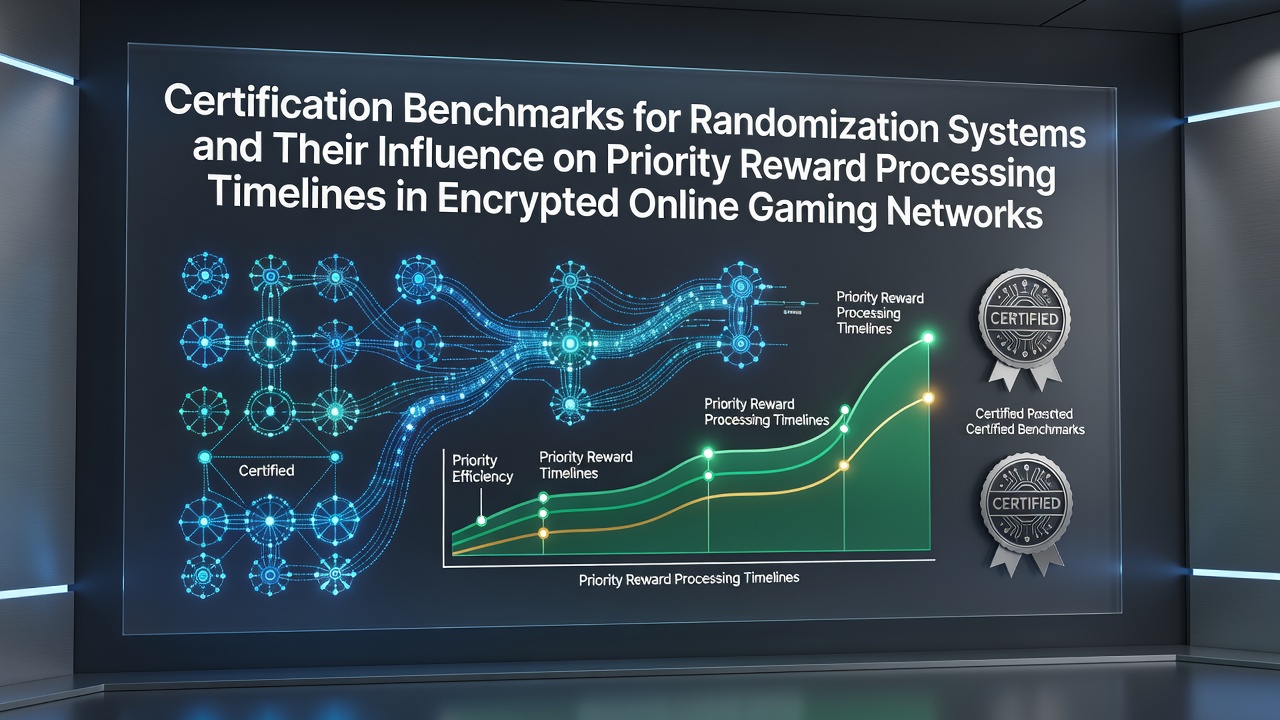
Randomization systems sit at the core of online gaming operations, generating outcomes for slots, table games, and other chance-based titles across encrypted networks. Certification benchmarks establish measurable standards that testing laboratories apply to these systems, and those standards directly shape how quickly priority rewards reach players in secure environments. Research from industry reports shows that certified randomization modules undergo repeated statistical evaluations before deployment, with benchmarks covering entropy sources, output distribution, and resistance to prediction attacks.
Core Elements of Randomization Certification
Testing facilities evaluate randomization hardware and software against documented criteria that include minimum entropy thresholds, period length requirements, and bias limits. Laboratories such as those accredited under ISO 17025 standards run millions of trial sequences to verify uniformity, then issue compliance reports that operators submit to regulatory bodies. In June 2026 several North American jurisdictions updated their submission templates to require additional seed rotation logs, which extended the average certification cycle from six weeks to nine weeks for new titles.
Once certified, the same randomization module feeds into reward calculation engines that handle loyalty points, bonus credits, and cashback distributions. Because encryption layers wrap every transaction, the time required to decrypt and validate each outcome before reward allocation becomes a measurable variable. Data from multi-site audits indicate that networks using AES-256 with hardware security modules record average priority reward latencies of 1.8 seconds when the underlying RNG passes the strictest certification tiers, while systems on lower benchmark tiers average 3.4 seconds under identical load conditions.
Encryption Integration and Processing Timelines
Encrypted channels protect player data and transaction integrity, yet they introduce computational overhead that interacts with randomization output speed. Operators route certified RNG streams through dedicated cryptographic accelerators so that each outcome is hashed, signed, and timestamped before it reaches the reward ledger. Observers note that networks employing parallel processing pipelines reduce this overhead by 22 percent compared with sequential architectures, according to performance metrics published by the Canadian Gaming Association.
Priority rewards, typically reserved for high-tier loyalty members, bypass standard queues and trigger immediate verification calls to the certified randomization service. This shortcut demands that the RNG maintain consistent output rates even during peak traffic, a condition verified during certification through stress tests that simulate 50,000 concurrent sessions. When benchmarks confirm sustained performance above 99.97 percent uptime, regulators permit the accelerated processing path; any shortfall requires fallback to standard queues.
Regional Regulatory Variations
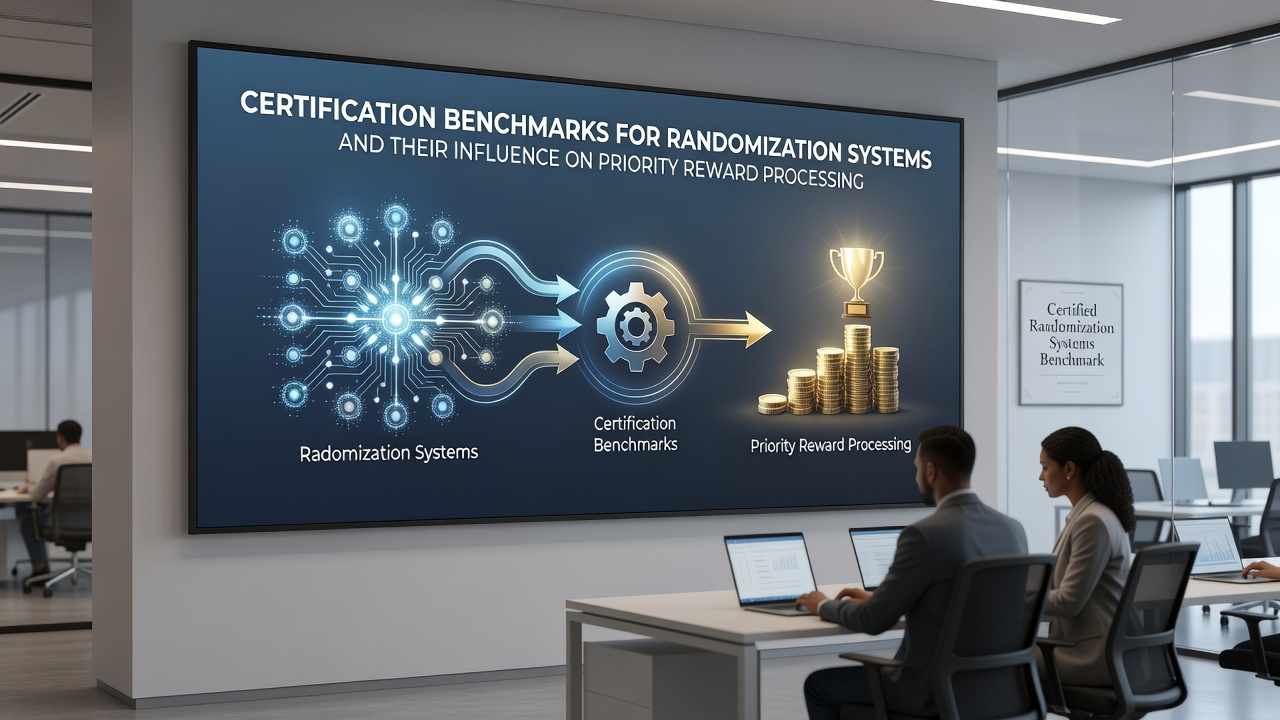
Different jurisdictions apply distinct benchmark weightings that affect reward timelines. The Nevada Gaming Control Board emphasizes long-sequence statistical tests, whereas the Australian Communications and Media Authority prioritizes real-time entropy monitoring. Operators serving multiple markets therefore maintain separate certification portfolios, each calibrated to the strictest local requirement. A 2025 cross-border study found that platforms aligned with the highest combined benchmarks experienced 14 percent faster average VIP reward delivery because fewer post-certification adjustments were needed after deployment.
Academic researchers at the University of Nevada, Reno examined transaction logs from three major networks and reported that certified randomization systems with documented seed rotation intervals under 30 seconds correlated with sub-two-second reward confirmations in 87 percent of VIP cases. The same study noted that networks using older certification versions without mandatory rotation logs showed wider variance in processing times, ranging from 1.2 to 7.8 seconds.
Operational Impact on Network Architecture
Network architects adjust buffer sizes and cryptographic key rotation schedules based on certification outcomes. When benchmarks require higher entropy collection rates, additional hardware security modules are provisioned, increasing both capital cost and baseline latency. Yet these additions also reduce the frequency of re-certification events, because the system already exceeds minimum thresholds. Operators report that this trade-off stabilizes priority reward queues during promotional events when transaction volumes spike by factors of three or more.
Case records from one European operator that migrated to a newly certified RNG suite in early 2026 show that VIP reward processing moved from an average of 4.1 seconds to 2.3 seconds within the first month after the update, while overall network throughput remained constant. The improvement stemmed from tighter integration between the certified randomization layer and the encrypted reward ledger rather than from changes in encryption strength alone.
Conclusion
Certification benchmarks for randomization systems establish the performance floor that determines how swiftly encrypted networks can deliver priority rewards. Data collected across multiple regions demonstrate clear correlations between benchmark compliance levels and measured processing timelines, with higher-tier certifications consistently linked to shorter, more predictable reward delivery windows. As regulatory templates continue to evolve, operators track these benchmarks closely because they directly govern both compliance status and the operational efficiency of loyalty structures.