How Encryption Protocols Accelerate Withdrawals for Mobile VIP Members Across Digital Platforms
Digital platforms that serve mobile VIP members rely on encryption protocols to handle withdrawals with both security and speed, and these systems have evolved considerably by May 2026. Advanced cryptographic methods now integrate directly into transaction pipelines, allowing verification steps that once required separate manual reviews to occur automatically within seconds. The result appears in reduced processing times across major platforms where high-value users expect near-instant access to funds.
Core Encryption Standards Driving Transaction Efficiency
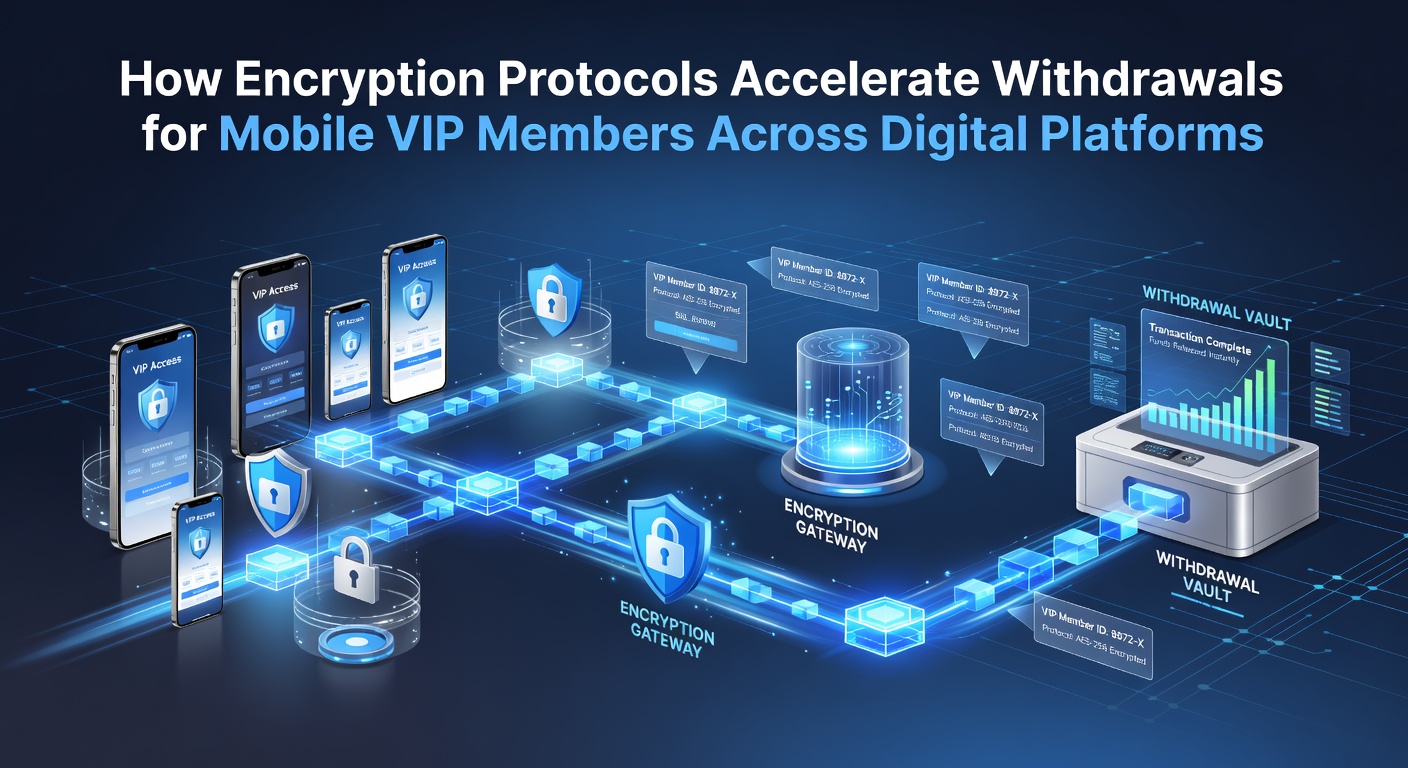
Protocols such as Transport Layer Security 1.3 combined with Advanced Encryption Standard implementations create a foundation that authenticates users and encrypts data simultaneously. Researchers at institutions tracking financial technology note that this dual function eliminates sequential security checks, because the same cryptographic handshake that confirms identity also secures the withdrawal request. Mobile applications for VIP members leverage these standards to maintain persistent secure sessions, which means repeat transactions avoid full re-authentication cycles that slow down non-VIP flows.
Hardware-backed key storage on modern smartphones further accelerates the process. When devices store private keys in secure enclaves, platforms can validate signatures without transmitting sensitive material across networks. Data from industry reports indicates that this approach cuts average withdrawal confirmation times by up to 40 percent compared with earlier software-only encryption layers used in 2023.
Integration with Mobile VIP Verification Systems
VIP programs on digital platforms often incorporate tiered authentication that encryption protocols streamline. Instead of routing every high-value request through multiple compliance layers, platforms embed risk-scoring algorithms that run inside encrypted channels. These algorithms assess transaction patterns in real time while the data remains protected, allowing low-risk VIP withdrawals to proceed without human intervention. Observers tracking platform performance note that such integration proves especially effective for users accessing services through dedicated mobile applications rather than browser-based interfaces.
Tokenization plays a supporting role by replacing account details with temporary encrypted tokens that platforms generate for each session. This method reduces the computational overhead of full decryption at every step, which helps explain why withdrawal requests from mobile VIP accounts complete faster than equivalent desktop submissions on many systems. According to findings published by the National Institute of Standards and Technology, token-based systems that comply with current cryptographic guidelines achieve both lower latency and higher resistance to interception attempts.
Regional Regulatory Influences on Protocol Adoption
Regulatory frameworks in different jurisdictions shape how quickly platforms can implement newer encryption methods. In Canada, guidelines issued by the Financial Transactions and Reports Analysis Centre encourage the use of standardized protocols that support automated verification while meeting anti-money-laundering requirements. Platforms operating in these markets report that alignment with such standards allows VIP mobile withdrawals to clear within regulatory windows that previously extended processing by several hours. Australian authorities have similarly updated expectations around secure transaction technology, prompting operators to adopt encryption suites that facilitate both compliance reporting and rapid fund movement.
European platforms follow specifications developed by the European Union Agency for Cybersecurity, which emphasize interoperability between encryption layers and existing banking rails. This interoperability reduces friction when VIP members initiate cross-border withdrawals, because the encrypted data formats align with those used by partner financial institutions. The outcome is fewer rejected transactions and shorter reconciliation periods.
Performance Metrics and Platform Comparisons
Platform operators that publish aggregated withdrawal statistics show measurable differences once encryption upgrades are complete. One analysis of major digital entertainment sites revealed that VIP mobile users experienced median withdrawal times of under three minutes after protocols compliant with post-quantum readiness standards were deployed in early 2026. The same cohort had waited an average of nine minutes under prior configurations. These gains occur without compromising the audit trails required by oversight bodies, because encryption protocols now include embedded logging functions that record transaction metadata in tamper-evident formats.
Developers achieve further acceleration by combining symmetric and asymmetric encryption in hybrid models. Symmetric ciphers handle bulk data transfer during withdrawal authorization, while asymmetric methods manage initial key exchange. This combination balances speed with forward secrecy, ensuring that even if long-term keys face future compromise, historical transactions remain protected. Engineers working on these systems report that hybrid approaches also simplify scaling when VIP membership numbers increase during promotional periods.
Future Protocol Developments Expected After May 2026
Work continues on lightweight encryption variants designed specifically for mobile environments with variable network conditions. These variants maintain the security guarantees of established standards while trimming message sizes, which proves advantageous for VIP users in regions where mobile data connections fluctuate. Early testing coordinated by academic groups suggests that such optimizations could reduce withdrawal latency by another 15 to 20 percent once rolled out more broadly.
Conclusion
Encryption protocols have become integral to the withdrawal infrastructure that mobile VIP members depend on across digital platforms. By embedding authentication and data protection into single streamlined processes, these protocols deliver the combination of security and speed that high-value users require. Continued alignment with international standards and ongoing refinements in mobile hardware support further improvements in transaction performance through the remainder of 2026 and beyond.